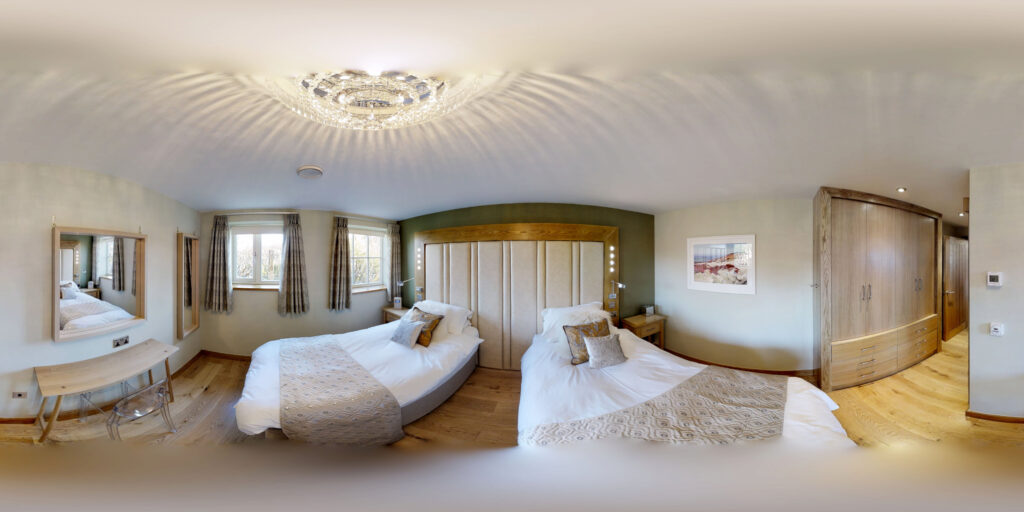
Is a 3D Tour Worth It? The ROI for Hotels, Event Spaces and Holiday Lets
Most hospitality marketing budgets still go on traffic: ads, listings, SEO. A recent 2026 guide from 3D tour specialists Go Casa argues that the best first investment isn’t more visitors, but making the ones you already get trust what they see. For anyone selling stays or venue hire to people who can’t visit first, that argument deserves attention.
The problem: guests can’t trust photos
Wide-angle photography flatters, and guests know it. Rooms look bigger, awkward proportions vanish, and buyers who suspect they’re being sold a polished picture fall back on comparing prices. Even when the photos do win the booking, the gap between image and reality can show up later in disappointing reviews.
A 3D tour (typically captured with Matterport) lets people walk the space, judge its real dimensions and see how rooms connect, without relying on a photographer’s framing.
The numbers the guide cites
The guide reports the following for properties using professional virtual tours:
- Website dwell time up five to ten times, a strong engagement signal
- Booking increases of 16% to 67%, a wide range, so treat it as directional
- 43% more direct bookings, which matters given OTA commissions of 15% to 30%
- 38% fewer unqualified enquiries, as guests and planners self-qualify by exploring the layout first
- 40% to 60% more engagement on listings with a 3D tour than on static photos alone
The cost side
Capture pricing quoted in the guide runs from roughly £350 to £600 for a holiday rental or villa, £600 to £1,000 for a boutique hotel or small venue, and £2,000 to £5,000+ for a large hotel or conference centre, plus around £15 to £20 a month for hosting.
The payback logic is simple. If OTA commission is 15% to 30% of each booking, a tour that shifts even a few reservations to direct can cover its cost quickly. For a holiday let, a handful of displaced commissions could do it. For larger venues, one converted event booking may be enough.
The international angle
Overseas guests face the biggest information gap. They can’t pop in for a viewing, they may be reading in a second language, and a mistake costs them a flight. A 3D tour is a language-neutral way to reassure them: no translation needed to see the bedroom layout, the step-free access or the view from the terrace. The guide also cites a claim that 70% of international buyers make decisions without visiting in person, which is exactly the situation a tour is built for.
Event spaces: the remote site visit
For corporate events, weddings and conferences, planners are often organising from another country or time zone. A 3D tour lets them measure rooms, check sightlines, plan catering flow and share the space with colleagues without booking a site inspection. The guide reports that venues sending a tour link with a proposal remove much of the buyer’s uncertainty, and stresses that speed of response matters: contacting a corporate lead within the first hour can raise conversion by up to 60%.
Making a tour work harder
The tour is a starting point, and the guide’s wider hierarchy suggests three ways to get more from it:
- Keep the booking button visible. Don’t let a heavy tour or video push availability and pricing below the fold, or guests will head to an OTA.
- Give AI search something to cite. Precise facts (room sizes, distances, capacities) are more likely to be picked up by AI assistants than vague descriptions, so pair your tour with specific data.
- Use it in every sales channel. Put the link in enquiry replies, RFP responses, email confirmations and OTA listings.
The takeaway
For most hospitality businesses, a 3D tour is one of the lower-cost, higher-leverage upgrades available, especially if a large share of your guests or event clients are booking from abroad. Before committing, ask for examples of tours in your sector, check that the platform loads quickly on mobile, and plan how you’ll measure results: dwell time, enquiry quality and direct booking share.
Source: Go Casa, “The Hospitality Marketing ROI Hierarchy: A Data-Driven Guide to Resource Allocation in 2026.“